Baidu’s new Apollo World model turns every car and pedestrian into an AI agent, letting its robotaxis complete full trips through virtual cities.
Baidu has unveiled Apollo World, a world model that simulates how other vehicles and pedestrians react to a robotaxi’s driving decisions, so its self-driving system can be trained and tested on complete trips through virtual cities.
Baidu announced the model at its Baidu AI Day in Shenzhen this week, and says it is already being used to test and validate its Apollo Go robotaxi service as it scales up fully driverless operations.

Every road user is an agent
In Apollo World, every other vehicle and pedestrian is modelled as an AI agent that makes its own decisions and reacts to the robotaxi. If the car slows down, changes lanes or gives way, the traffic around it responds, so the driving system is tested in dynamic traffic conditions.
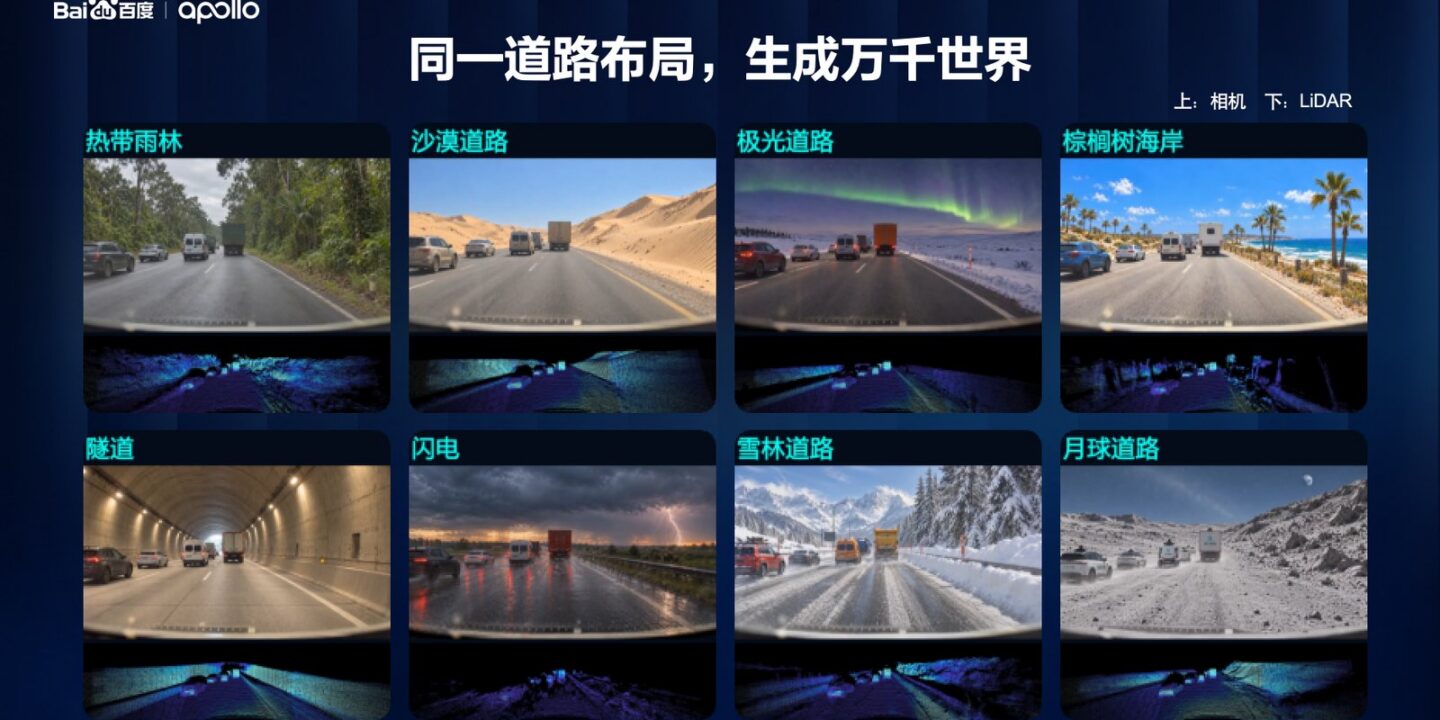
The model generates simulated camera, lidar and other sensor data in real time, so the driving system sees the virtual world as it would the real one. Each decision the car makes changes the scene, which feeds new data back into the system in a closed loop. Vehicles can also drive continuously between any two points in a virtual city, completing whole ride-hailing trips from accepting a booking to dropping off passengers.
“Apollo World models every traffic participant in the virtual scene as an AI agent that can make decisions and interact, so driverless vehicles can travel between any origin and destination in a virtual city. This creates virtual ride orders that let us validate an ‘infinite future’ in advance,” says Ze Yang, distinguished architect and head of world models at Baidu’s Intelligent Driving Group (IDG).
An examiner, not an artist
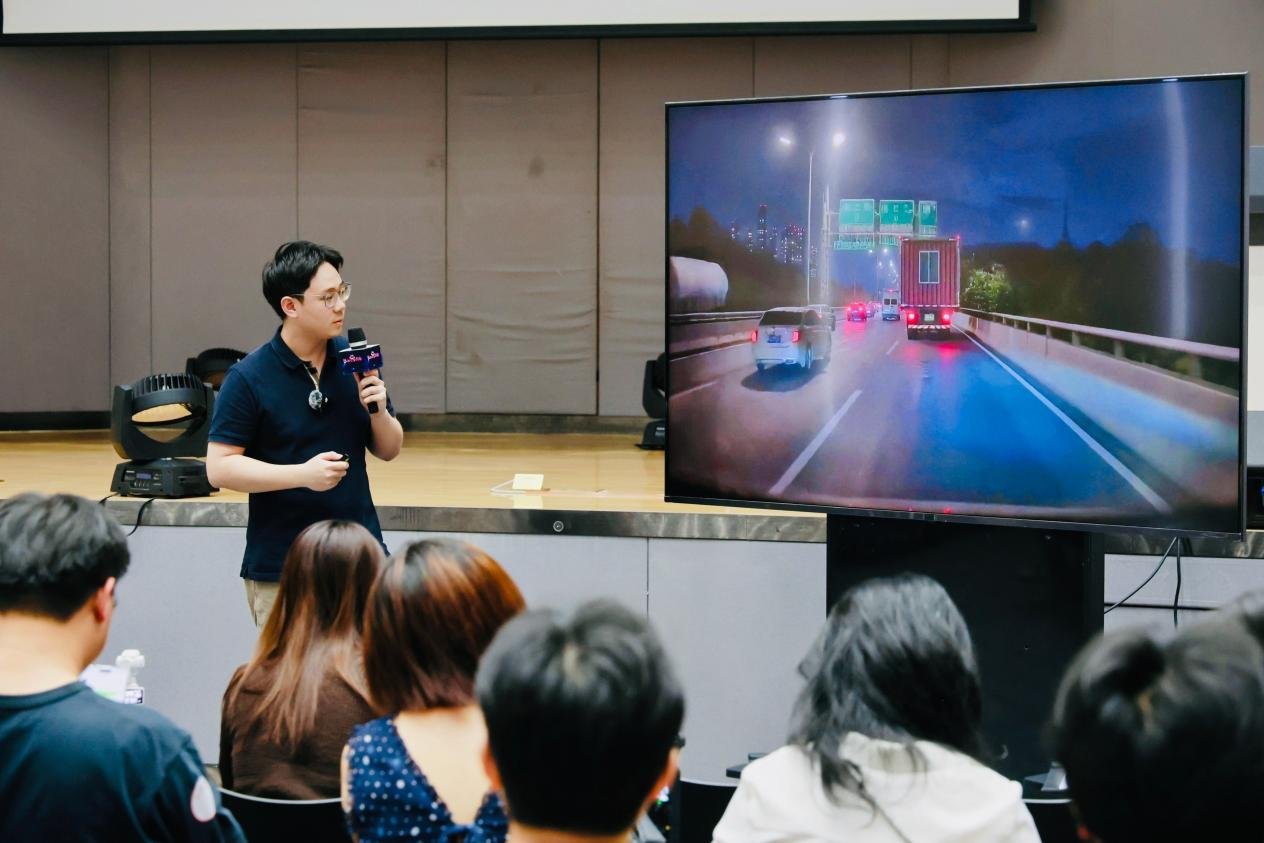
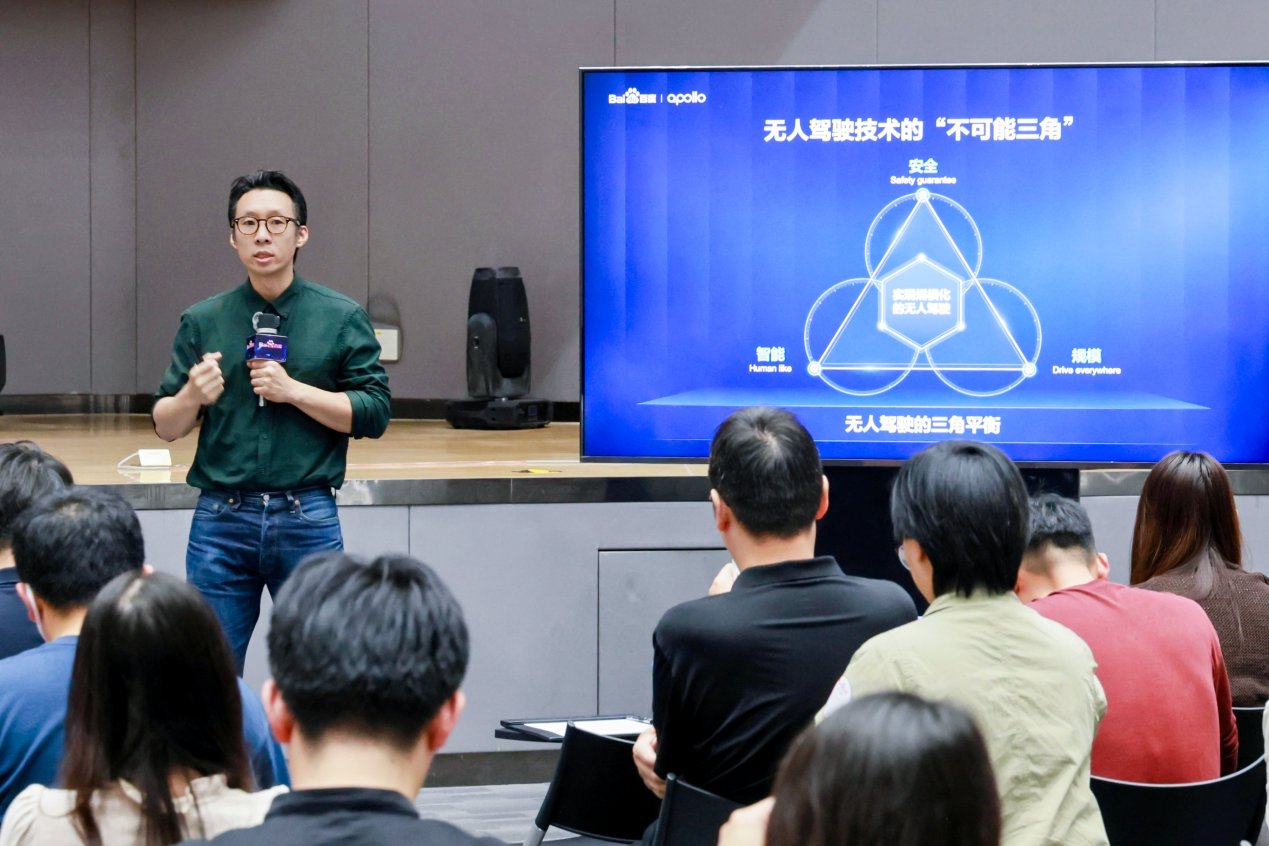
Liang Wang, chief architect of Baidu IDG and chair of its technology committee, says a world model shouldn’t just be “an artist that generates cool videos”. More importantly, it should be an “examiner” that supports safety evaluation through simulation, with the AI driver as its student, learning, being tested and improving in a virtual environment.
To set a bar for what counts as a real world model, Baidu has outlined what it calls a “2+3” framework. The two baseline requirements are causality, meaning it predicts the next moment from the current state, and interactivity, meaning it responds to actions that change what happens next. Its capability is then judged on three attributes: physical accuracy, stability over long runs without objects or details drifting, and real-time performance as scenes get more complex.
Rehearsing the long tail
Baidu says the model helps with three problems in scaling autonomous driving: rare long-tail scenarios that are hard to cover with real-world mileage, the cost and risk of testing dangerous situations on public roads, and the need to validate continuous driving across many different roads. Difficult situations from real-world driving can be turned into repeatable virtual tests, and Apollo World can also generate scenarios that haven’t yet happened on real roads.
Baidu cites industry analyst estimates that Apollo World can cover 100,000 virtual kilometres a day, roughly equal to three years of continuous testing by a single real-world test car with a safety driver. It says the same technology could also be applied to robotics and other physical AI.
Apollo Go now operates in 28 cities across left- and right-hand-drive markets. It had provided more than 23 million rides by June 2026, and by August its fleet had covered more than 350 million autonomous kilometres, more than 240 million of them fully driverless.