iCAUR design chief Su Jun on the Bronco-meets-Tesla thinking behind the V23, and why the Chery brand will not build a ute, a diesel or a Jimny rival.
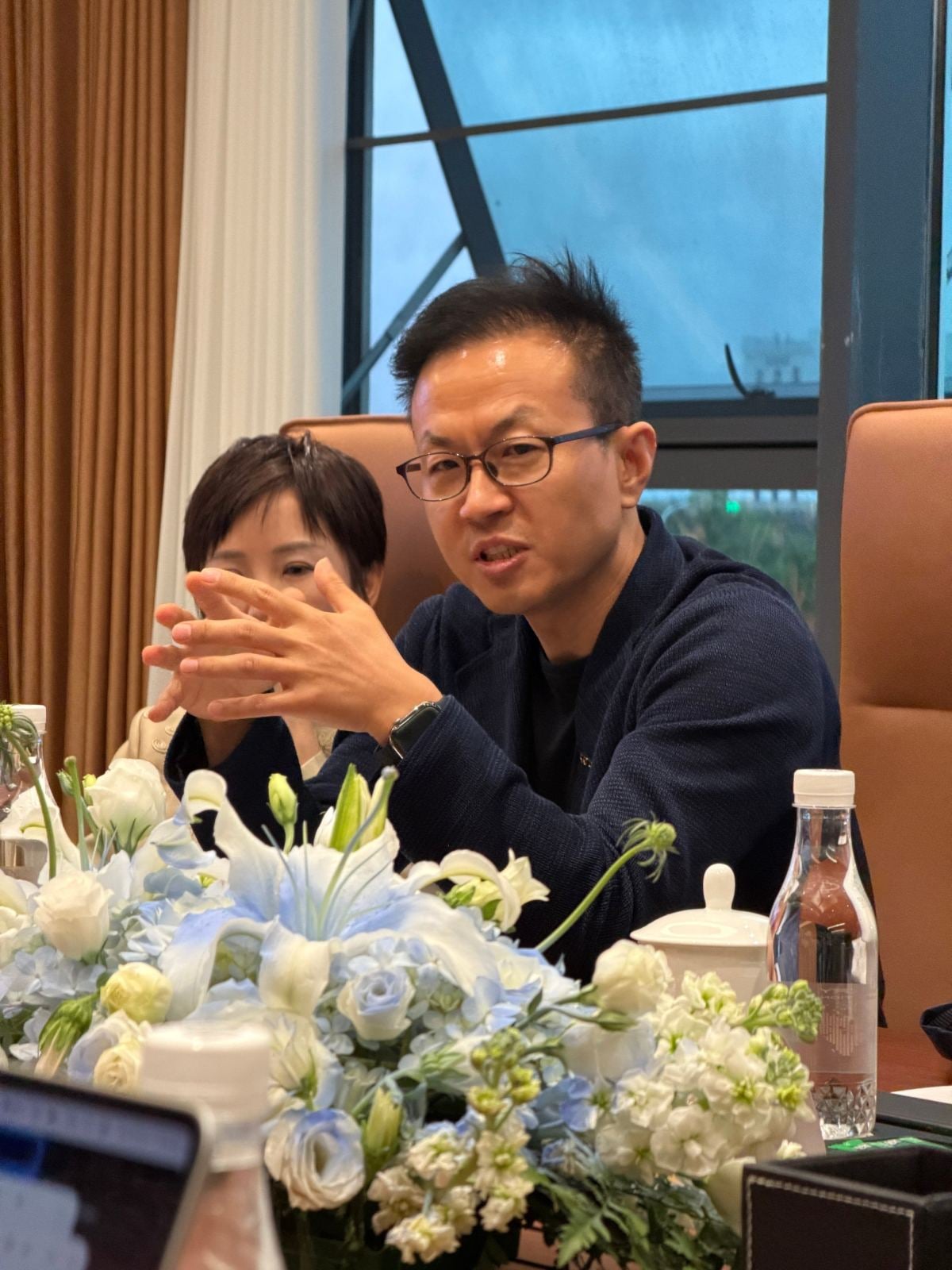
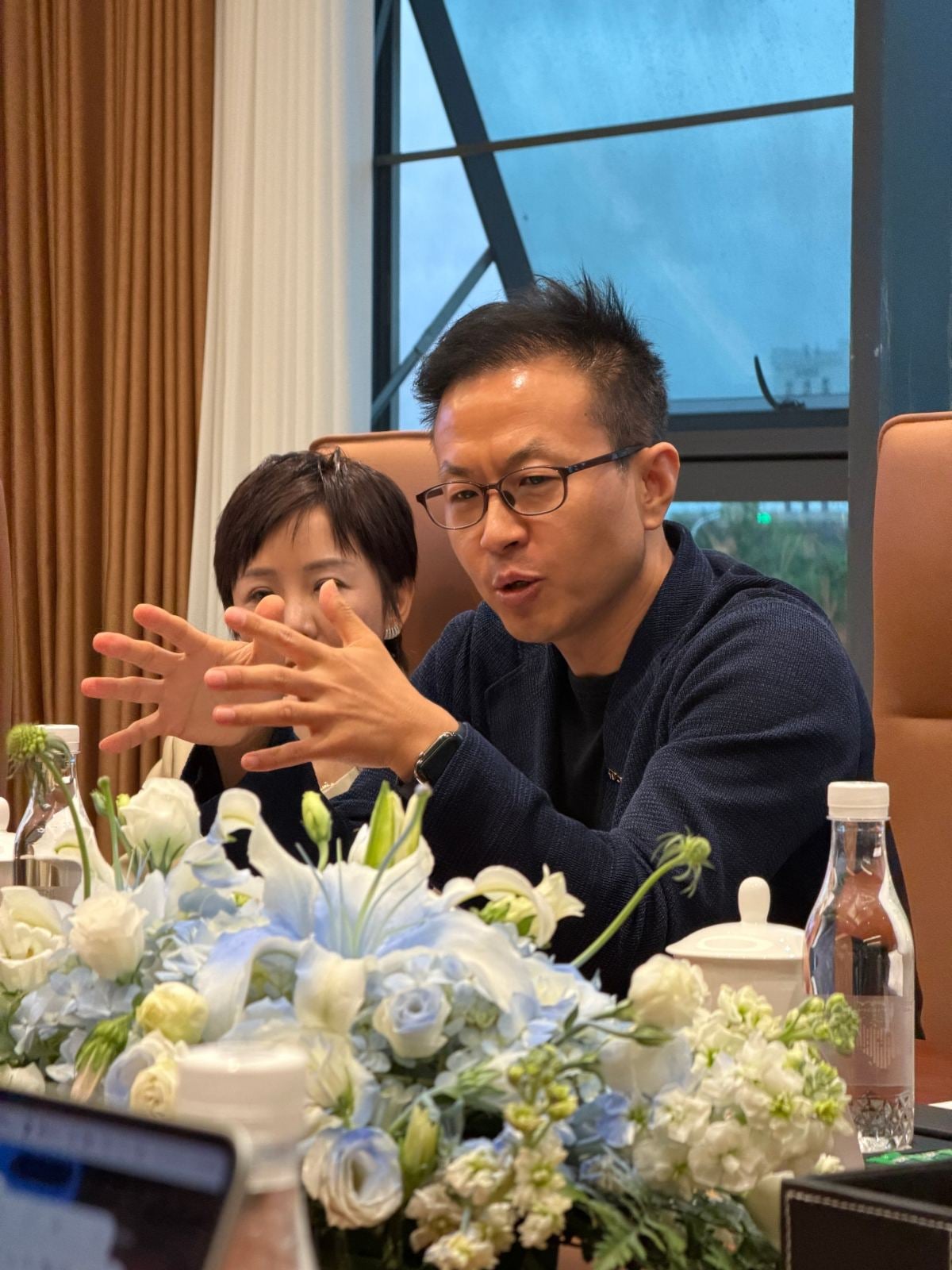
Dr Su Jun owns two very different cars, a Ford Bronco and an older Tesla Model S, and he says iCAUR (pronounced eye-car, and sold as iCar in China) started out as his team’s attempt to build something that combined the best of both.
Su is a vice president of Chery Automobile, where he oversees design, brand and business operations for iCAUR. He came to cars from industrial design, holds a design PhD from Tsinghua University, taught the subject for some years, and in 2014 founded Smartmi Technology, a design-led electronics company. He joined Chery with his automotive R&D team in early 2024.
Speaking to media at Chery’s headquarters in Wuhu, he explained where the idea came from.
“The Model S was amazing, very smooth, very quiet and very comfortable, but the seating position is very low,” he says. “When you’re driving and there’s something beautiful to see, the position of your eyes is totally different. I love the view from the Bronco, but I also love the power of the Tesla, so our dream was to combine those two things. We made the first car for ourselves, and then found that lots of people wanted the same thing. That’s why the V23 has been so successful. In only one year it sold 100,000.”
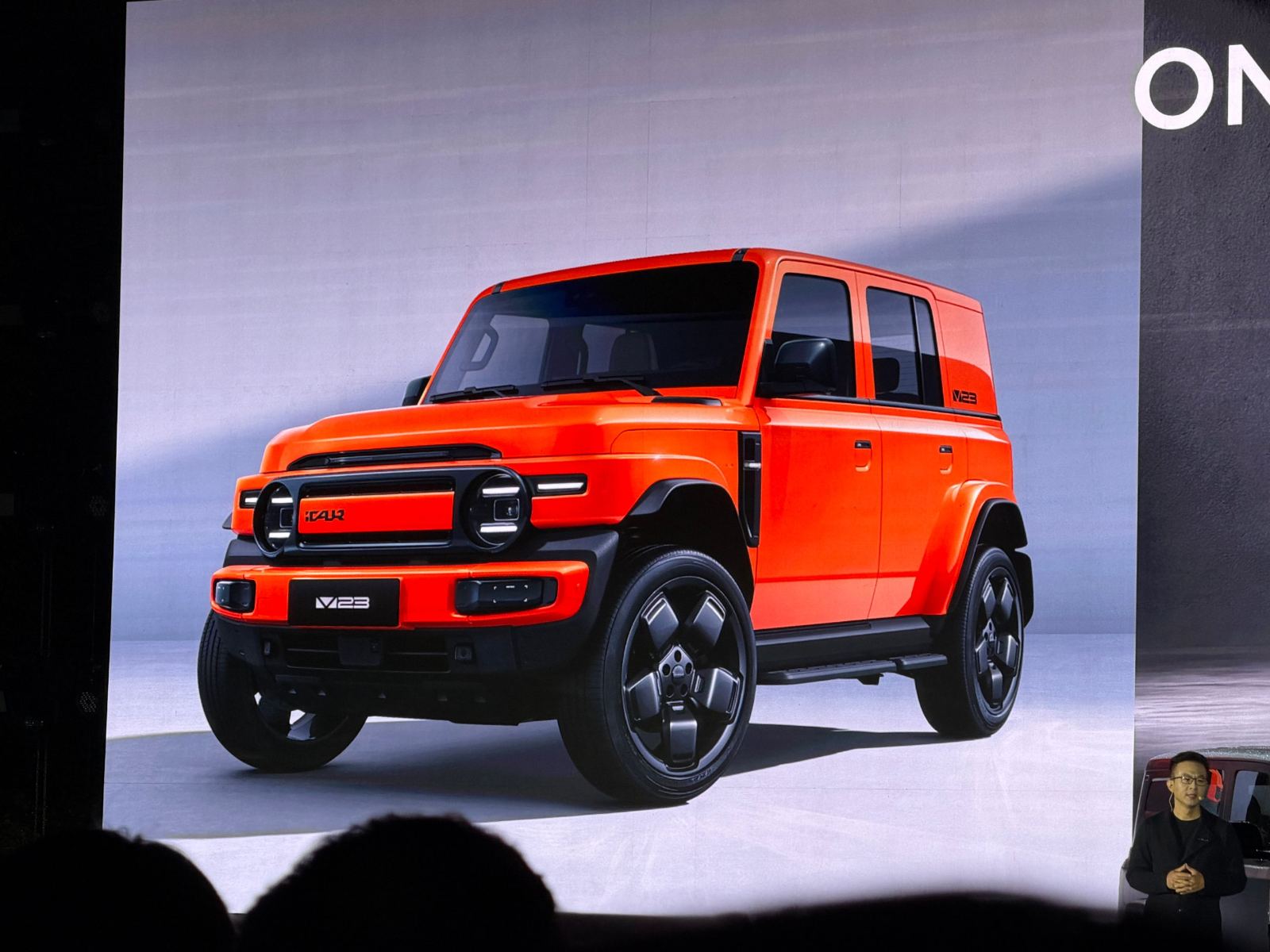
The V23 has since picked up a Red Dot design award. Su says its upright, squared-off shape draws on military vehicles, which have always been valued for their practicality and space.
Beyond boxy
iCAUR has become known for that look, but it plans to expand beyond boxy SUVs. Asked what will tie the range together when it does, Su says the family resemblance has to come from more than the shape.
“If products belong to one family, it’s not only about the shape. With Mercedes, you can see the G-Class and the S-Class and know they belong to the same family, so I don’t think boxy is the only gene of the family,” he says. “We’re influenced by brands like Apple and Muji, which are very simple. Apple’s products are all different, but they share a minimalist design and you can tell they’re from the same family. That’s the job for our designers: making different things that still belong to the family, so you could take the logo off and still know what it is.”
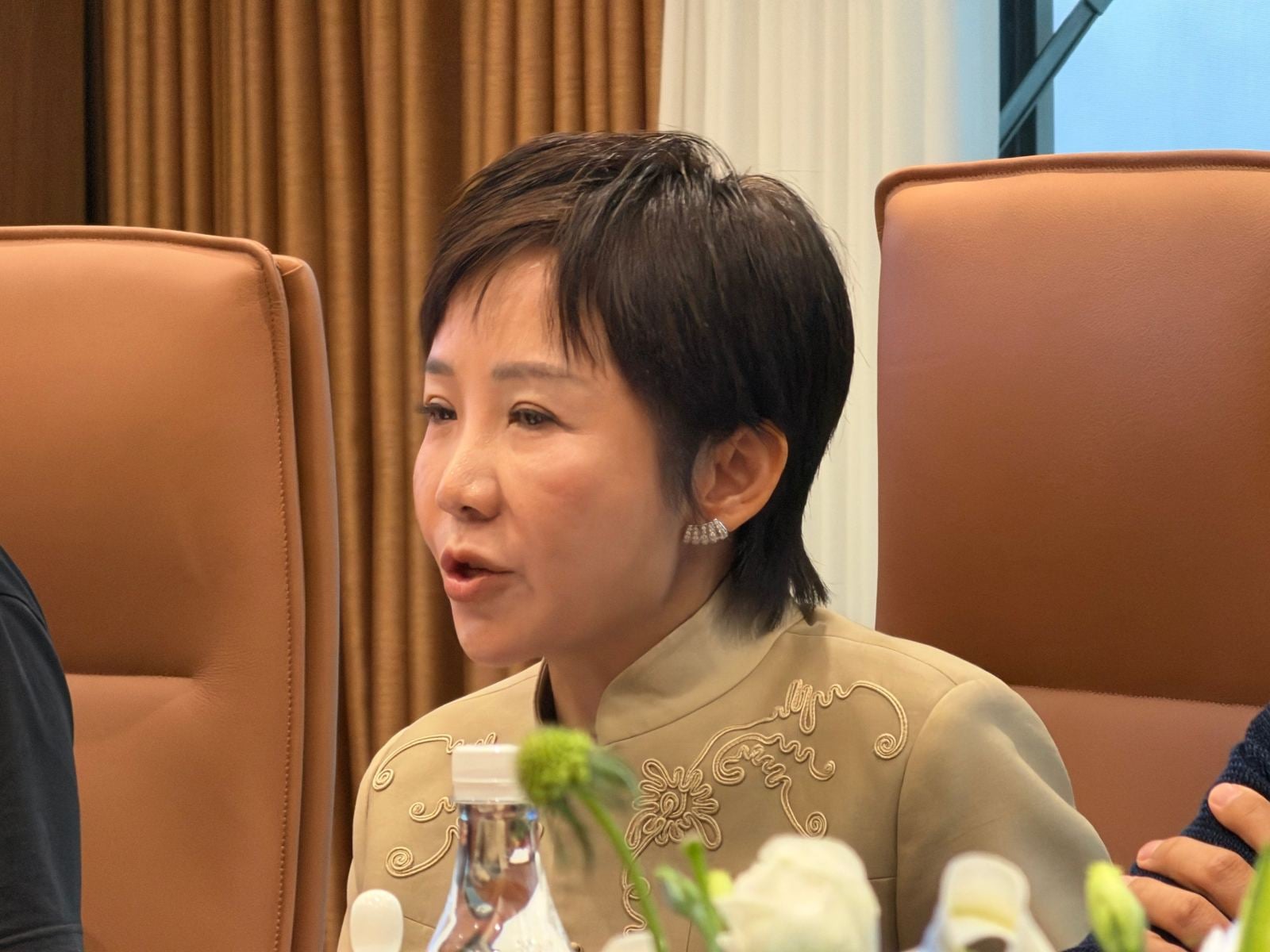
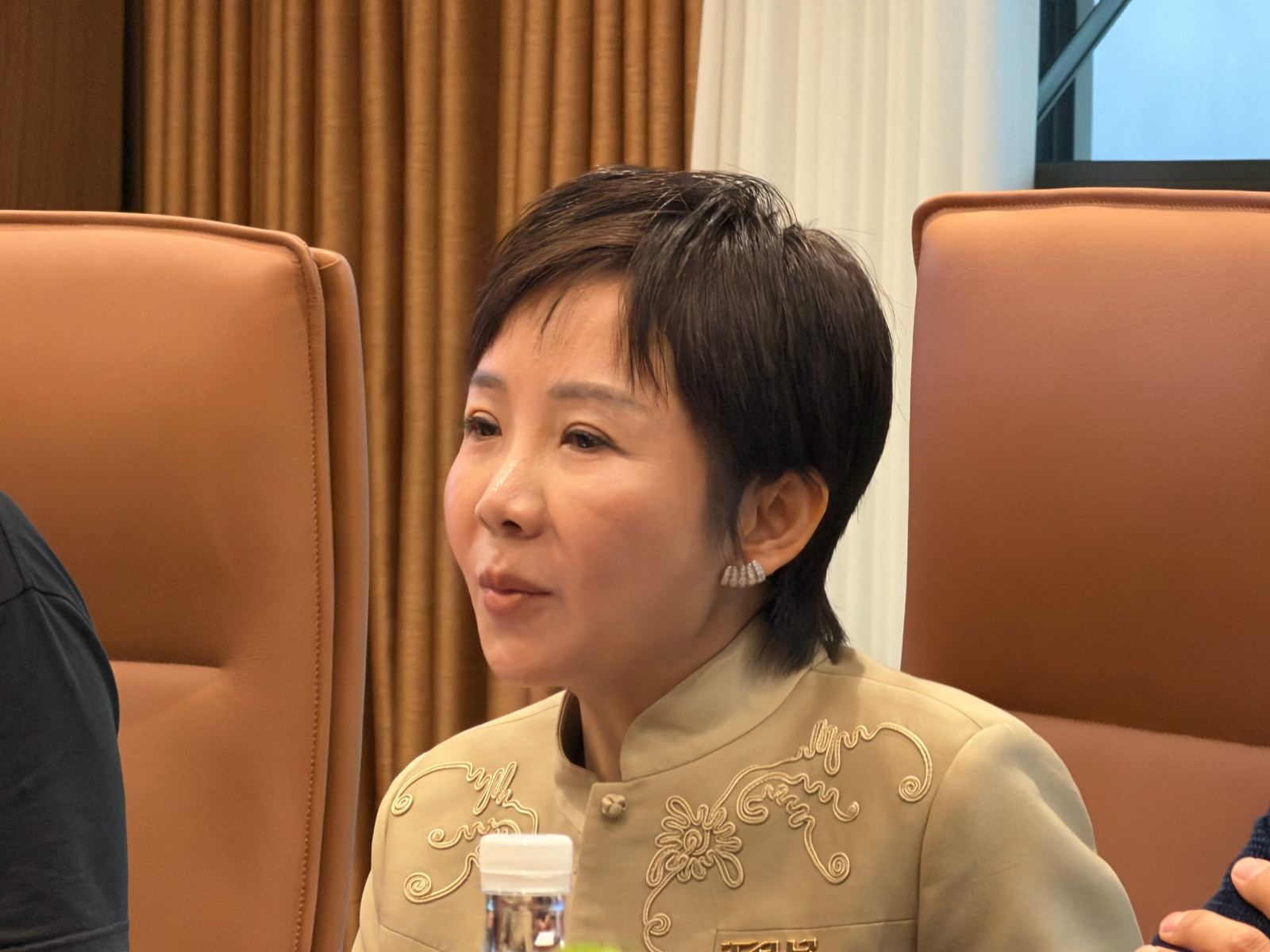
Ronna Luo, CEO of iCAUR International, says she now leaves the word boxy out when she talks about the brand. She joined iCAUR after senior roles at General Motors, Ford and Lincoln.
“When I communicate, I actually remove the word boxy, because I prefer not to limit ourselves,” she says. “We’re a new-energy SUV brand with classic design and new technology, and we’ll definitely have our own family DNA.”
No ute, no diesel, no ladder frame
The executives were just as clear about what iCAUR will not build. A ute is off the table, with that job going to Chery’s own coming Stockman pickup.
“I don’t want to confuse anyone. We don’t have any pickup or truck in the plan,” says Luo.
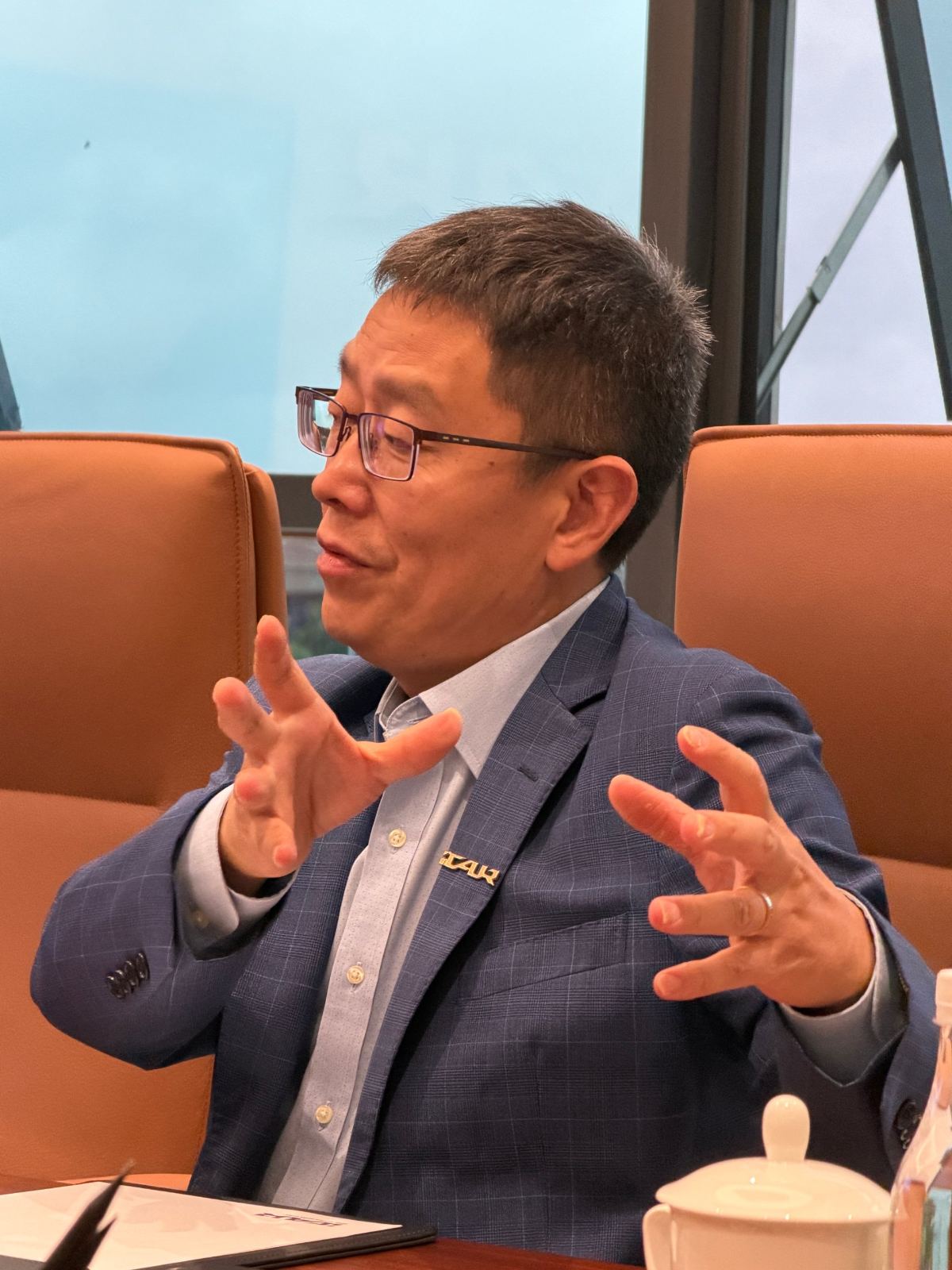
Chief technology officer Ma Yongdong says a ute was looked at in the early stages but lost out to other priorities. “To be honest, at the beginning we did have pickup planning, but we are one company and the priority has to go to the big-volume models,” he says. “Maybe later we’ll have something bigger, but for now we are focused on the cars that sell in volume.”
Asked whether iCAUR would ever offer a diesel or diesel hybrid for long-distance driving, Luo’s answer was brief: “Definitely no diesel engine.” Nor will the brand build a separate-chassis four-wheel drive, even though Chery has developed a ladder-frame platform for the Stockman. “I don’t think we would go in that direction,” says Ma. “We are focused on safety and on everyday driving.”
The line-up will stay mostly SUVs, says Luo, and the crossover iCAUR had on display in Wuhu is about as far from that as it plans to go. “If you walk downstairs you’ll see a crossover, and that’s probably already pushing the limit,” she says. “There’s no plan for a car yet.”
There won’t be anything to rival the Suzuki Jimny at the small end either. Despite the similar styling, Su told us iCAUR won’t build a vehicle that size because it’s too small for the brand’s technology and platforms.
Range extenders over plug-in hybrids
Instead of diesel, iCAUR is using battery-electric and range-extender powertrains. In a range extender the petrol engine works only as a generator, so the wheels are always driven electrically, and Ma says that suits owners who split their driving between town and the open road. “We care about people who travel long distances,” he says. “In the city, over shorter distances, you can drive on pure electric, but on long trips the engine is there to support you.”
Luo says the company studied vehicles such as the Toyota Prado when deciding how to put its cars together, and that is part of why it chose range extenders over plug-in hybrids.
“We are always humble about learning from success stories. The Prado has been very popular in China, and it’s famous for being easy to use, easy to repair and tough,” she says. “One of the big things we learned is not to make the cars too complicated, and not to add things customers don’t need. We use range-extender technology, which is much easier to repair than a plug-in hybrid because the systems are separate, so it’s more economical for owners to repair and maintain. And when you drive our cars you’ll use physical buttons, not buttons on a screen. It’s safe and it’s enjoyable.”
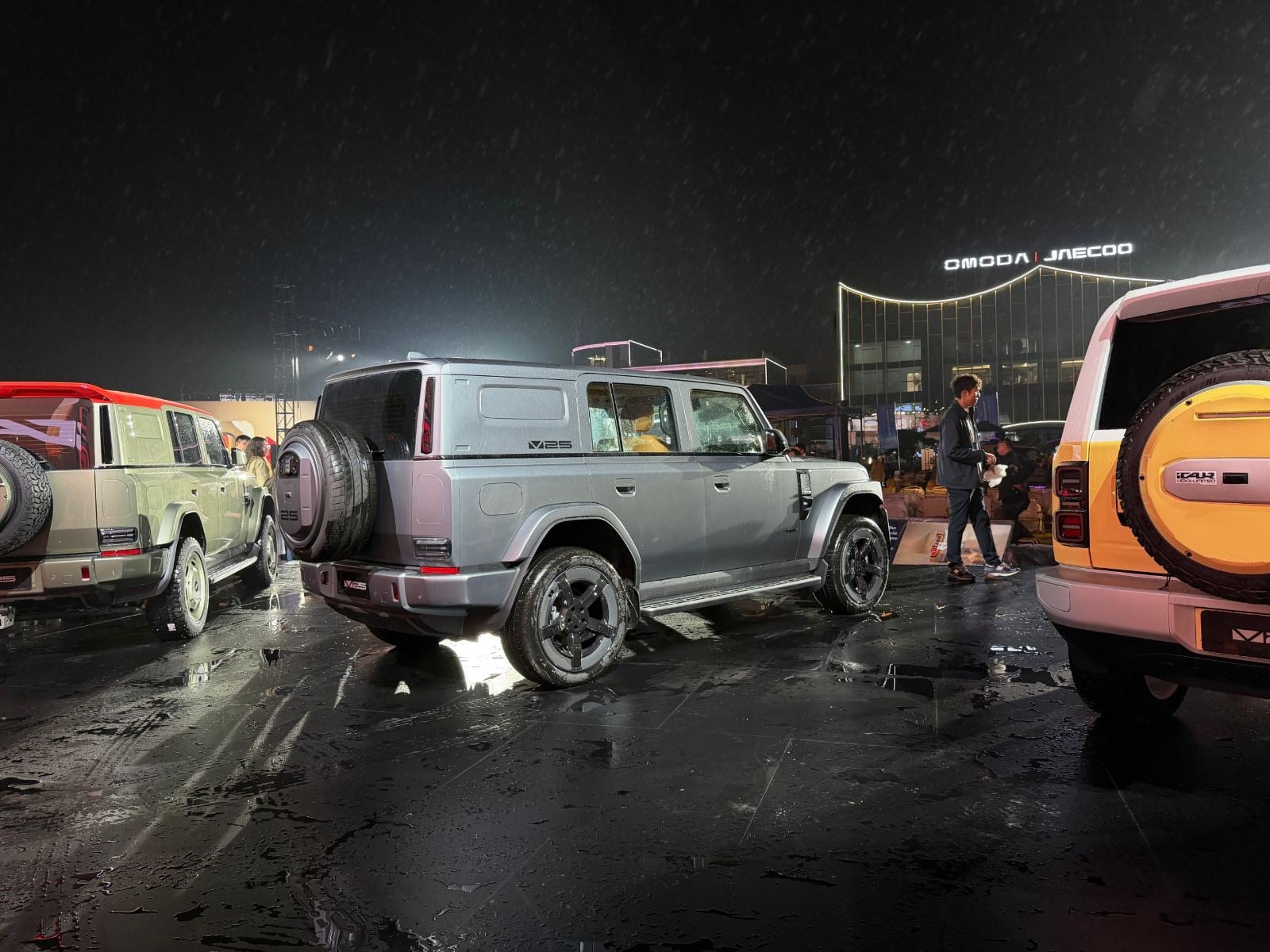
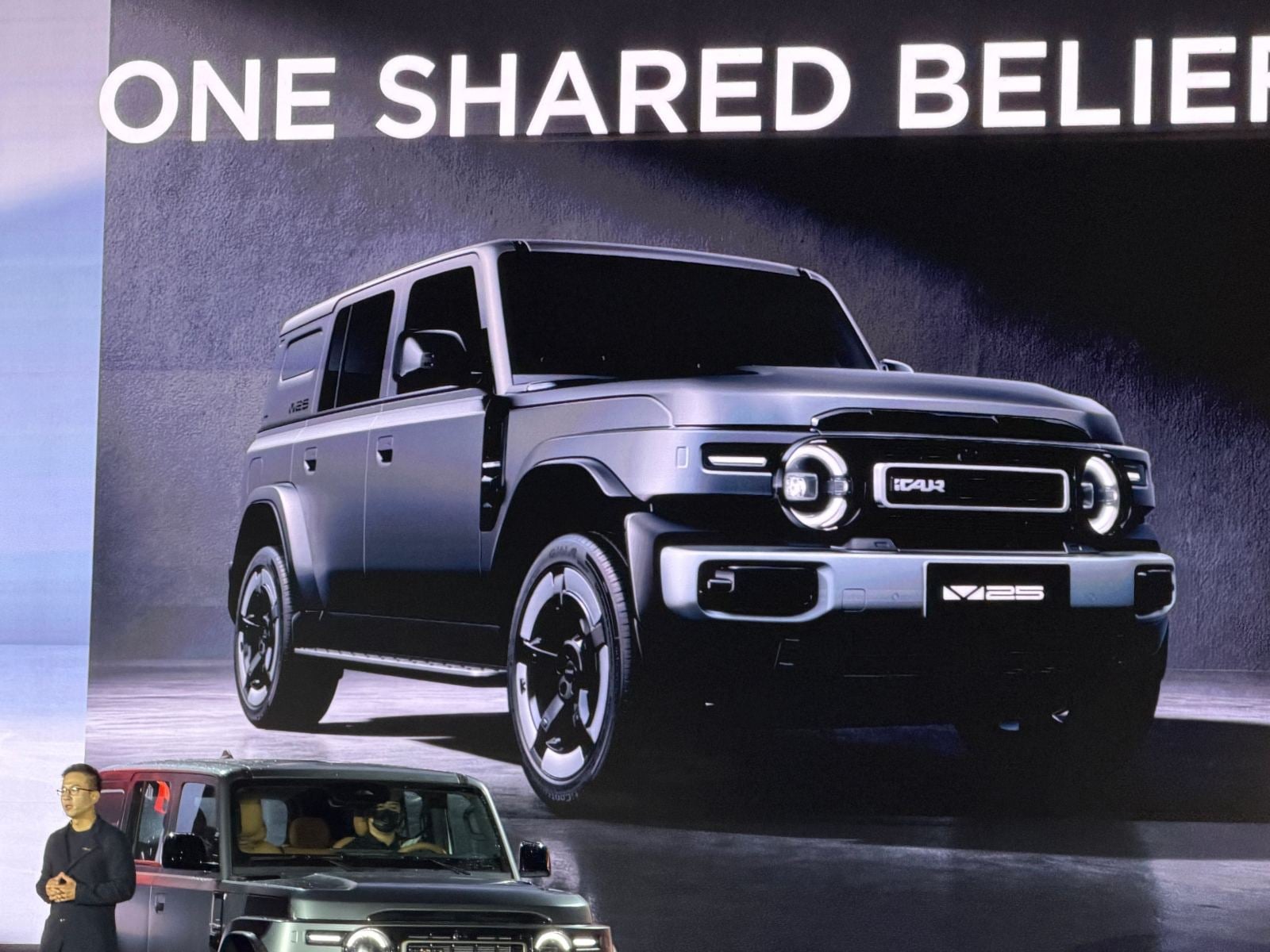
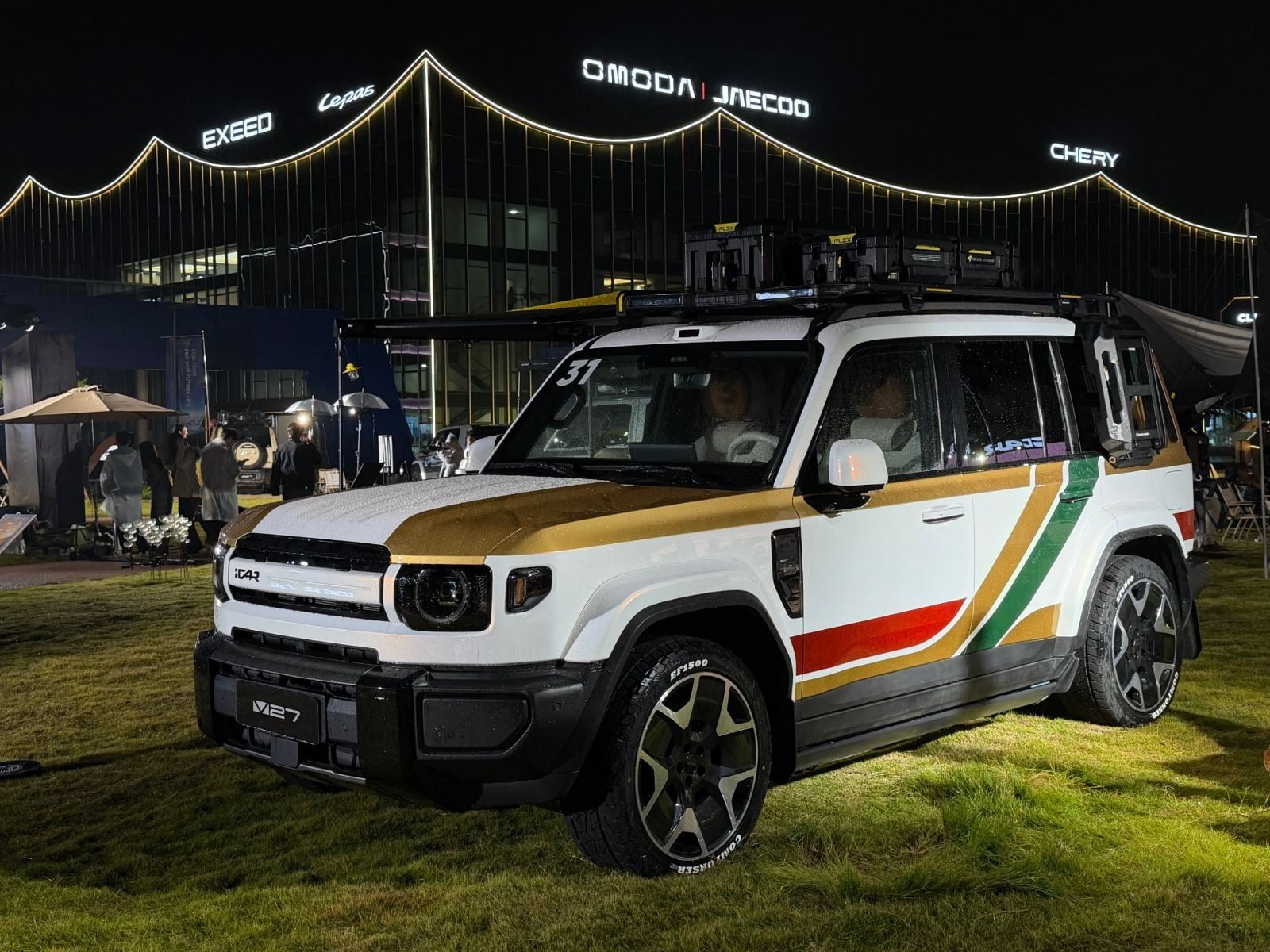
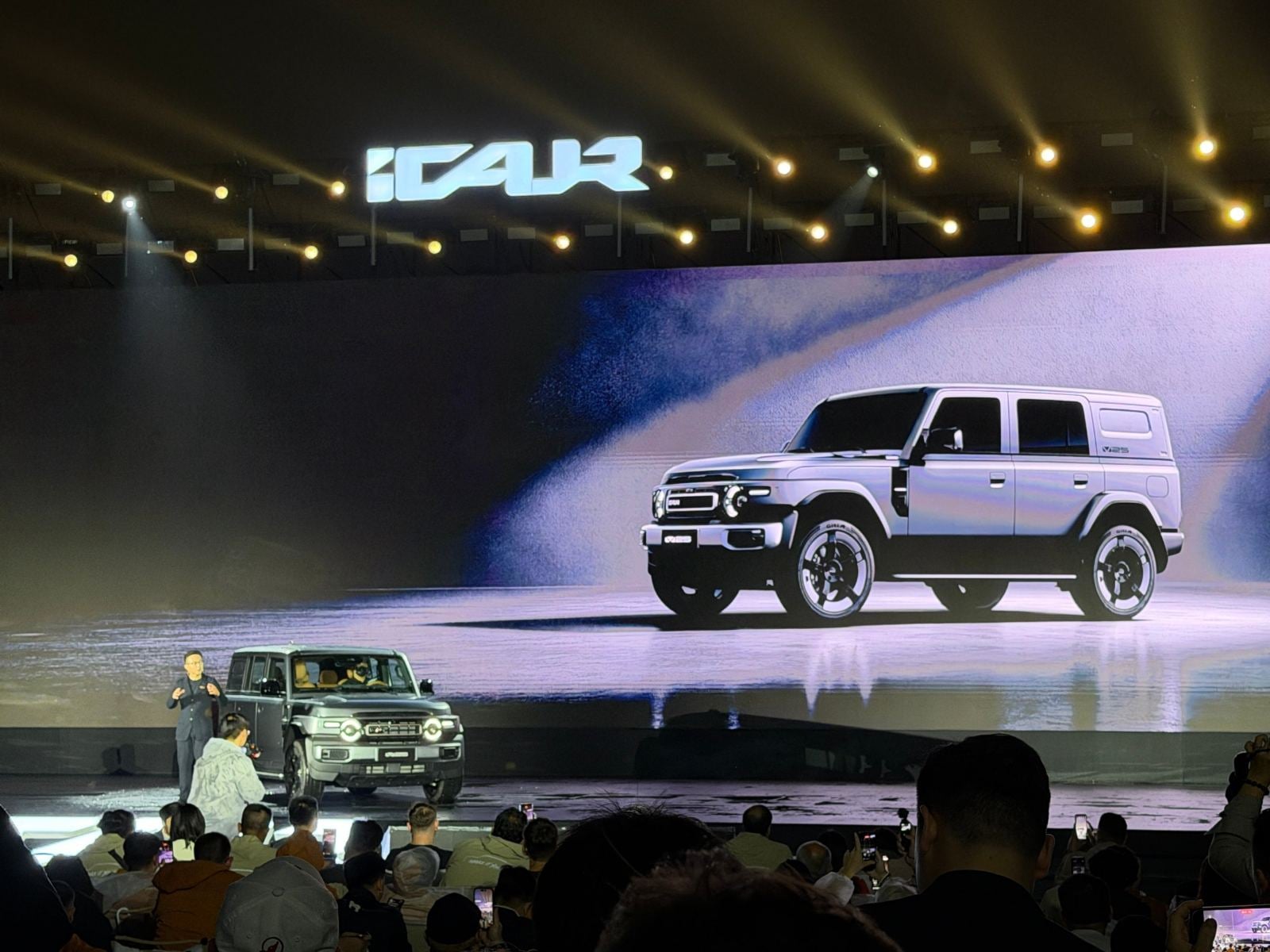
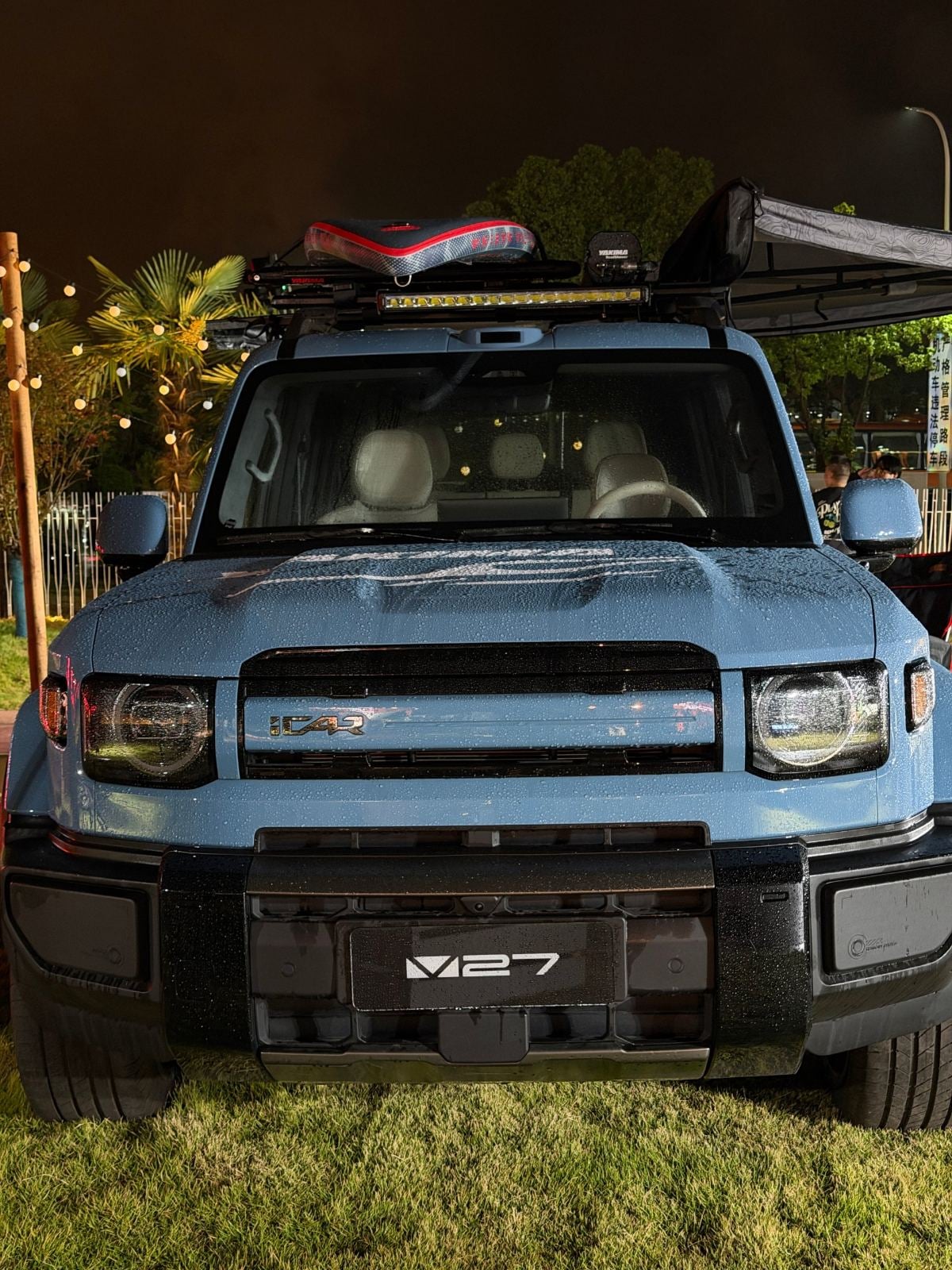
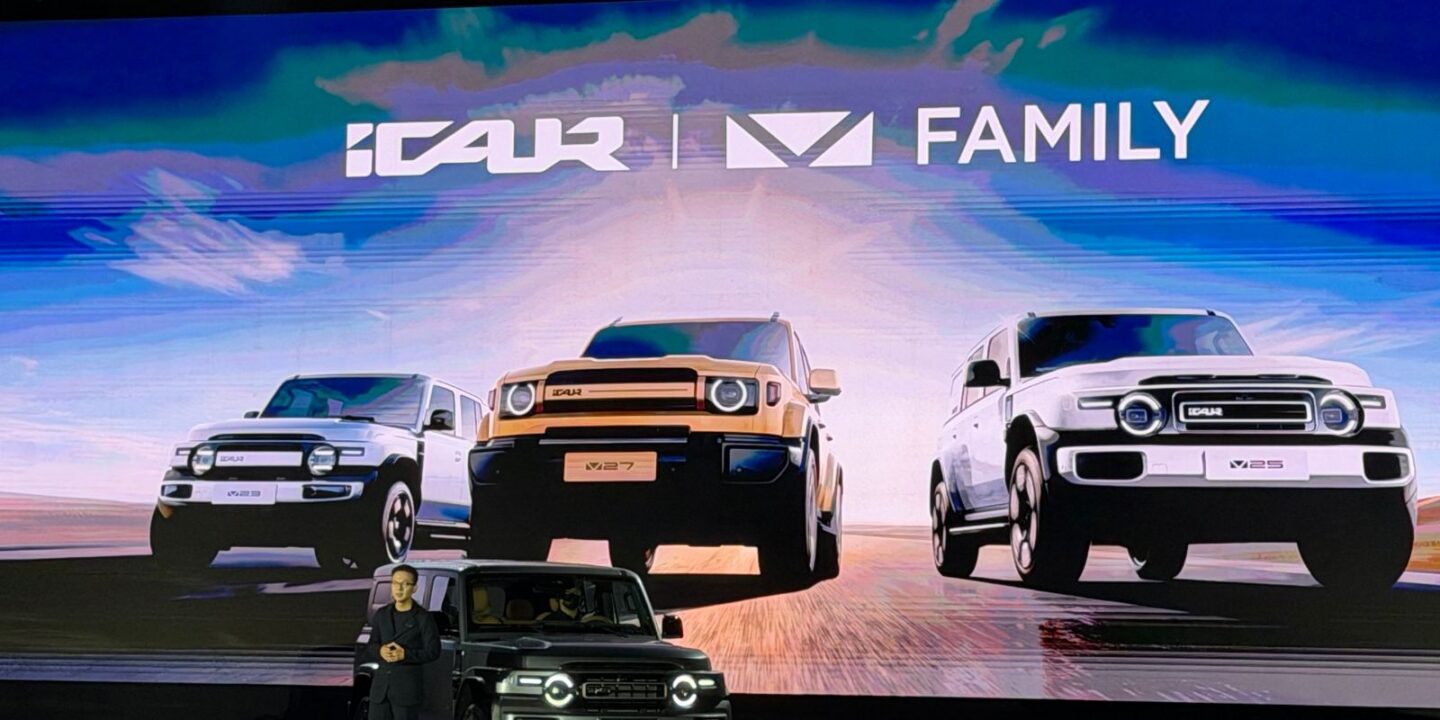
The V25, shown to international media at the user summit in Wuhu in both range-extender and battery-electric forms with electric all-wheel drive, sits in the middle of the range at 4,636mm long. The range-extender version uses a 1.5-litre turbo petrol engine making 115kW to charge a 33.68kWh battery, giving around 150km of electric-only range, and can tow 1,800kg with an optional kit. The V23 small electric SUV sits below it, with the 5,055mm V27 topping the range.
Younger than Jetour, and going global
Within the sprawling Chery Group, the brand closest to iCAUR in character is Jetour. Luo says the two are aimed at different buyers. “iCAUR is targeting mostly urban individuals who want a car for everyday life, but who sometimes want to explore the boundaries and go on more adventurous journeys,” she says. “Jetour is more on the side of toughness.” Su puts the difference down to attitude: “Compared to Jetour, I think we are younger.”
The brand is now heading overseas as a premium offering positioned above Chery, with its own sales and service networks. Dealer recruitment is under way in markets including Australia and New Zealand, where it arrives in 2027 with the V23, V25 and V27.
Su says the line-up won’t stop there, and that the brand is aimed at buyers who are young at heart rather than young in years. Beyond the production cars, the company is working on concepts such as the X25, which rethink the shape of a car altogether.
“We don’t think the car will always stay the way it is today,” says Su. “We have advanced projects researching future transport, taking apart the functions of the car and combining them in a totally new layout. Before I started this brand, some people invited me to work on robots, and I said no. Robots are not my dream. My dream is to make beautiful transportation vehicles.”